


THE POLISH SPIRIT

Beyond Borders, Beyond Time
Written by KalinaEvert

Poland is more than just a location on a map. You feel it before you see it — a current that, despite the surface appearing calm, continues to hum beneath it. Despite changes in borders, flags, and empires, this nation's spirit has always been more than its physical location. For over a century, the nation was absent from official maps, yet for some reason, it refused to disappear.
When we talk about Poland, we are talking about a presence that has endured erasure. Imagine a country that has been erased from the map but continues to whisper its name in back rooms, at kitchen tables, and in hymns sung quietly enough that only family members can hear.
Imagine grandmothers who continued to teach their grandchildren a language that was no longer accepted by the country’s rulers, because the words themselves were a sign of disobedience. When it was time to rise, that whisper turned into a murmur, then a song, and finally a roar.
This is an act of recognition. Poland insists on existing, which has shaped not only its history but also its character — in contrast to other countries that merely exist. It is a nation that understands how to wait, persevere, gather strength in quiet, and rise when the time comes.

Strength Forged in Adversity
Adversity is not a chapter in Poland; it is the spine that keeps the narrative cohesive. The land was divided by foreign emperors and kings as if it were a pie to be sliced at someone else’s table. And when the dust settled, someone always went back to sow again — even as armies marched across fields where rye was just turning to gold.
Through the crushing of uprisings, the burning of cities, and the freezing Siberian winds that swallowed thousands, the Polish spirit was tempered like steel. Instead of shattering, it gained a strange kind of brilliance. It became ironic and proud, solemn and unyielding — a spirit capable of planning a rebellion one minute and kneeling in prayer the next.
As if to prove that memory can take physical shape, Warsaw stands as the perfect example of a city destroyed and then rebuilt brick by brick. Today, to walk through its streets is to witness architecture turned into defiance.
Solidarity and Subtle Humor
The world often associates Poland with conflict, but the reality is one of unity. When the stakes are high, Poles pull together. A stranger at the border can count on hot tea, a blanket, and someone saying, “Sit, you must be tired.” Everyone cares about a neighbor’s bad luck.
This was never more evident than in 2022, when millions of Ukrainian refugees entered Poland and were welcomed with open arms, spare rooms, and hot meals — despite the tense history between our countries and the memories of Volhynia woven into many Polish households.
Here, solidarity is not a catchphrase. It’s instinct. It came to the surface in the 1980s when Gdańsk shipyard workers, armed with nothing but faith, courage, and paper placards, brought an empire to its knees. And every time there is a flood, a crisis, or a war nearby, it rises again — quietly, steadily.
And then there is the humor: sardonic, dry, frequently absurd. In Poland, jokes are often about surviving. It’s how people learned to laugh at authority without ending up in jail for treason, and how they softened the sting of censored newspapers and empty shelves. The jokes remain razor-sharp, as if forged from the same steel as the history that made them.
Freedom as a Birthright
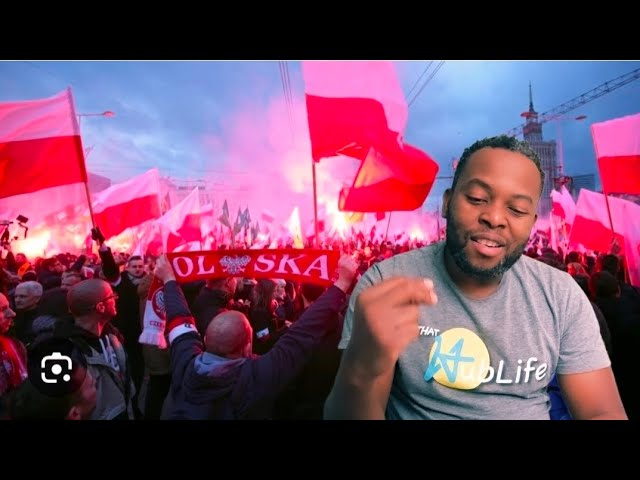
In Poland, freedom comes naturally. There is something in the Polish temperament that defies ownership. You can rename the streets, censor the newspapers, or even occupy the land — but you cannot stop a Pole from thinking for himself. Maybe it comes from being one of the most invaded nations in the world. The idea of Poland endured despite being partitioned three times in the eighteenth century and removed from the map for 123 years. Quietly but firmly, freedom was taught to every generation as a duty.
This desire for freedom is always present — like a string pulled taut — even if it isn’t audible in everyday life. It’s there in small gestures: the stubborn refusal to abandon one’s mother tongue, the silent toasts to the fallen and the lost, the way children are taught that history matters because it is theirs.
It explains why uprisings were planned knowing they would fail, why revolts continued even when they were doomed, and why cities were rebuilt when there was barely enough food to survive. Freedom in Poland is unquestioned, fiercely quiet, and as natural as breathing.
Conclusion – The Spirit That Stays
Beyond glass cases and museums, the Polish spirit endures. It moves through marketplaces, cobblestone streets, and the quiet obstinacy of daily life. For a nation destroyed and rebuilt so many times, endurance and elegance have become second nature.
For those who arrive here, this spirit is not just something you see. It’s something you feel — something that insists you carry a piece of it with you when you leave.


Comments